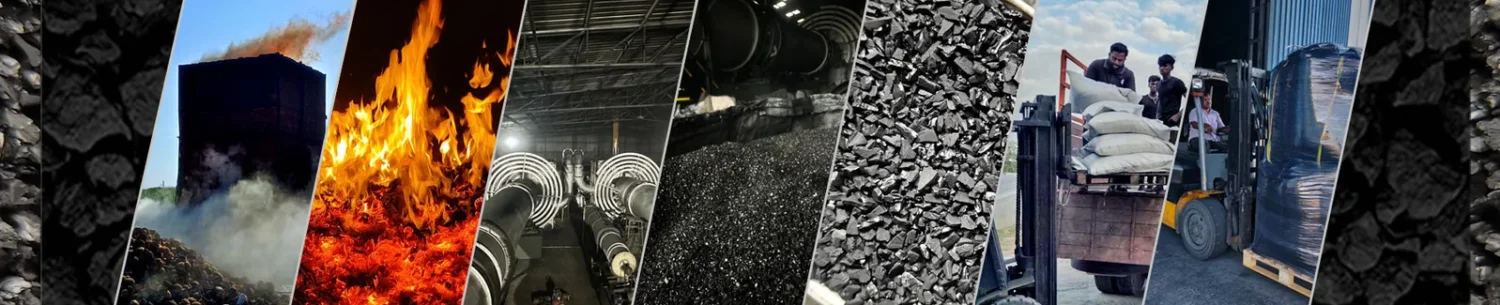
Understanding Different Grades of Activated Carbon and Their Applications
The application of Activated Carbon (AC) in diverse industries today is of great significance. It is deemed the best yet affordable way of eliminating impurities from both air and water. But if your business is significantly dependent on AC rather than any other alternatives (reverse osmosis/UV treatment), then you have to be more knowledgeable about the same. Just keeping an idea about the definition won’t help you in the long run. There are different types and grades of activated carbon according to various applications. And only knowing them, in depth, will help you identify the best for your business.
This guide, brought to you by us at Austro Carbon, will help you navigate this complex, yet vital, selection process so you can make an informed choice. Read on to unlock some intriguing insights of AC, meticulously curated by our experts.
What Determines the Grade of Activated Carbon?
Some critical and quantifiable parameters define the quality and performance of ACs. These elements direct how the ultimate product will condition with the particular contaminants you need to eliminate.
- Surface Area and Pore Size: The grade is generally categorized by its internal architecture. AC is typically a sponge with an unparalleled high internal surface area. For instance, if it’s micropores, it’s set to be applicable for gas and water purification. On the other hand, if it’s mesoporous in nature, its medium-sized surface is suitable for larger molecules like color bodies in sugar purification.
- Raw Material: The core material (coconut shell, wood, or coal) propagates a distinct pore structure and overall performance profile.
- Activation Process: To get the desired surface chemistry and pore structure, the activation methodology is carefully controlled.
To ensure proper standards in terms of quality, the AC manufacturer must put the product through established testing standards. Key indicators like Iodine number and adsorption capacity indicate the certification (according to the country).
Since Austro Carbon is a pioneer in AC manufacturing and exporting, you can expect that our products meet all kinds of certification standards like ASTM, BIS, EU, and AARL. Our state-of-the-art laboratories, run by field professionals, ensure that our product’s performance meets these international standards.
Types of Activated Carbon Based on Physical Form
Each type of activated carbon is optimized for specific handling and application requirements and comes in various physical dimensions.
a) Powdered Activated Carbon (PAC)
- Attributes: It consists of very minute particles, giving it a quick rate of adsorption. It is typically used in a slurry form and is not normally regenerated.
- Applications: Talk about activated carbon water purification? Its where PAC comes into play. Additionally, it also gets applied in food and pharmaceutical purification processes where prompt, bulk contaminant removal is required.
b) Granular Activated Carbon (GAC)
- Attributes: It has larger particles than PAC, making it appropriate for use in fixed beds and columns. Its greater size allows for extended contact time and makes it durable and reusable.
- Uses: GAC is the driver in perpetual processes like heavy wastewater treatment, air purification, and odor control systems.
c) Extruded Activated Carbon (EAC)
- Characteristics: It is where AC is compressed into cylindrical format. This shape offers low dust, optimal pressure drops, and exceptional mechanical strength. Thus its easier to handle and load into vessels.
- Applications: It is appropriate for gas phase applications such as: industrial gas purification, solvent recovery and air filtration systems where structural reliability is non-negotiable.
Raw Material-Based Grades: Tailoring the Pores
Although the activation process decides the grades, the raw material has everything to do with it. Let’s understand each one of them:
- Coconut Shell Activated Carbon: This grade of microporous AC finds many industry applications (mainly air and water filtration). It essentially captures small molecules responsible for taste, odor, and Volatile Organic Compounds (VOCs).
- Coal-Based: Obtained from wide range of coal (like lignite or bituminous), this grade offers a rich balance of both meso and micropores. It is an affordable alternative, widely used in large-scale industrial purification and municipal water treatment.
- Wood-Based Activated Carbon: This grade is characterized by a broader, highly porous structure with a prevalence of mesopores. Its one-of-a-kind structure makes it flawless for removing larger molecular weight impurities. Subsequently, it is frequently used in decolorization requisitions for processes like sugar or chemical sanctification.
Applications Across Industries
The right activated carbon grade can be precisely matched to diverse industrial needs:
- Wastewater Rationalization: GAC and PAC grades are used to eliminate organic pollutants and trace contaminants, ensuring safe and clean water for municipalities and industry.
- Purifying Air and Gas Adsorption: EAC and Coconut GAC are critical for scrubbing harmful gases, solvents, and odors from industrial stacks and HVAC systems.
- Processing of Beverage and Food: High-purity, often acid-washed grades (like those we specialize in) are used for decolorization and purification in the production of sugar, edible oils, and alcoholic beverages.
- Gold Recovery and Chemical Purification: Unique, hard-grade GACs (coconut-based) are used in the Carbon-in-Pulp and Carbon-in-Leach methodologies to adsorb gold from cyanide solutions.
Choosing the Right Grade for Your Application
Opting for the appropriate grade is not a guessing game; it’s an on-point and thorough technical decision. Here are the elements that you should resurface:
- Pore Structure vs. Impurity: The pore size must match the molecular size of the contaminant you are trying to eliminate. Do you need a substantial micropore volume (like coconut shell) for smaller molecules, or a larger pore structure (like wood-based) for bigger molecules?
- Regeneration Capability: For sustained, high-volume applications, you need a physically solid GAC or EAC that can withstand thermal regeneration to be reused multiple times.
- Flow Rate and Impurity Weightage: The concentration of impurities and the required speed of processing will determine the necessary adsorption capacity and contact time.
If your supplier has laudable expertise, your purchase would be on point. That is why it is crucial to get hold of a reputable supplier. Moreover, the deal should be transparent, right from the beginning. For instance, if your supplier promises to deliver you bulk AC but fails on the D-day, then your business might face idle times. You don’t want that, do you?
Conclusion
By now, you must have got an idea of how important it is to comprehend your Activated Carbon type. You can’t afford to bring in the wrong one to your manufacturing unit, especially when you are exporting in bulk.
At Austro Carbon, we understand the sentiments towards running a sophisticated business. Even in terms of municipalities, purifying wastewater, the stake is high. Thus, to meet the huge needs of top-notch AC, we strive to offer the best to our clients worldwide. With our 36-acre site in Tuticorin and dedicated R&D facility, we at Austro Carbon promise you unparalleled activated carbon products for your seamless filtration systems.
Hi, this is a comment.
To get started with moderating, editing, and deleting comments, please visit the Comments screen in the dashboard.
Commenter avatars come from Gravatar.